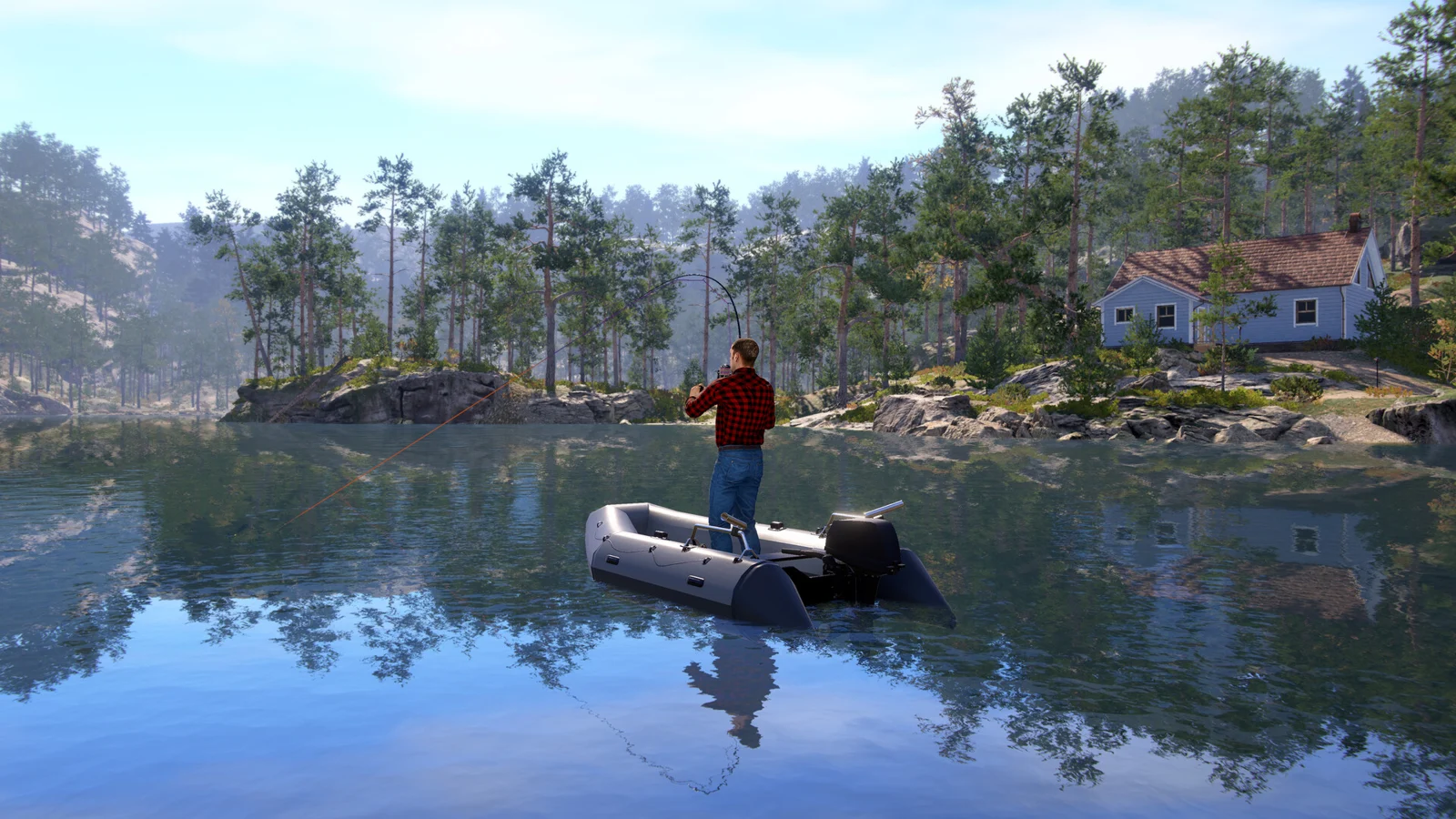
Two clocks, two purposes
Use the in-game time and weather display for fishing context. Use your real start and finish times only if you want to understand how long the session lasted. Mixing the two produces a note that cannot reconstruct either the virtual conditions or your evening. The compass can also provide position and coordinates; copy them accurately if you need a repeatable location reference.
Write the visible conditions
Record the displayed weather, temperature if shown and a short description of visibility. Keep wind direction with the compass reference rather than interpreting the direction of a decorative tree movement. For example, an illustrative row could contain “game clock 07:20; overcast display; same shoreline position; light float setup.” It should not contain an invented productive temperature or an assumed species schedule.
Connect conditions to a specific attempt
Place the rig and bait alongside the conditions, not in an unrelated page. If you move from a sheltered bank to another location during the session, begin another row. If you replace a float setup with spinning tackle, label the transition. Without those boundaries, an apparent change in fishing response might simply correspond to a different method, a new position or the passage of substantial game time.
Read patterns as questions
After several entries, look for a comparison you can investigate again. Perhaps a familiar arrangement was easier to observe in one view, or you repeatedly ran out of attention before trying a planned adjustment. Those are useful findings even without a general rule about fish. Keep uncertain causes in a separate “possible explanation” field. The diary should help you remember circumstances, not manufacture certainty from a small collection of sessions.
A comparison that preserves its limits
Imagine two diary rows from the same bank, one before and one after a planned move. Put a divider between them and label the change in position. If the sky also changed during the outing, retain that observation. The note now describes two contexts honestly. It does not need to decide whether position or weather caused a different response. Keeping both facts visible is what makes a future return more informative than a confident rule copied from an incomplete memory.